How to read the Contingencias storm radar
This guide explains what the radar shows, where its data comes from, how to read the colours and what its limits are.
Where the data comes from
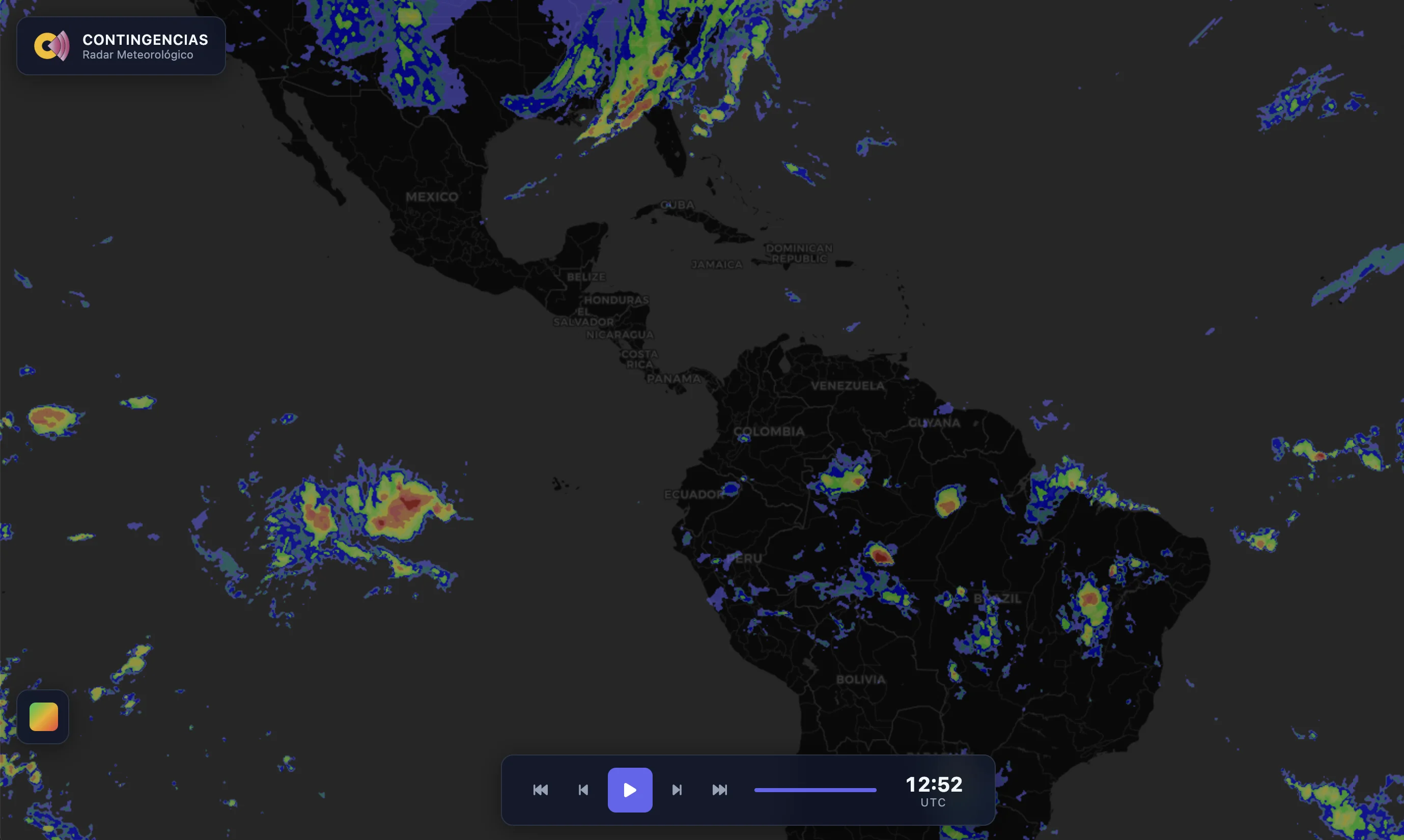
The radar is a layer of the Contingencias map and it uses a different source depending on where you are looking. Across most of the Americas it is built from infrared images of the GOES-19 satellite, from NOAA. In Europe it uses OPERA, the ground radar composite from EUMETNET, where there is coverage. In the rest of the world it uses other radar sources, such as RainViewer. The map switches source by itself, depending on the area on screen.
How to read the colours
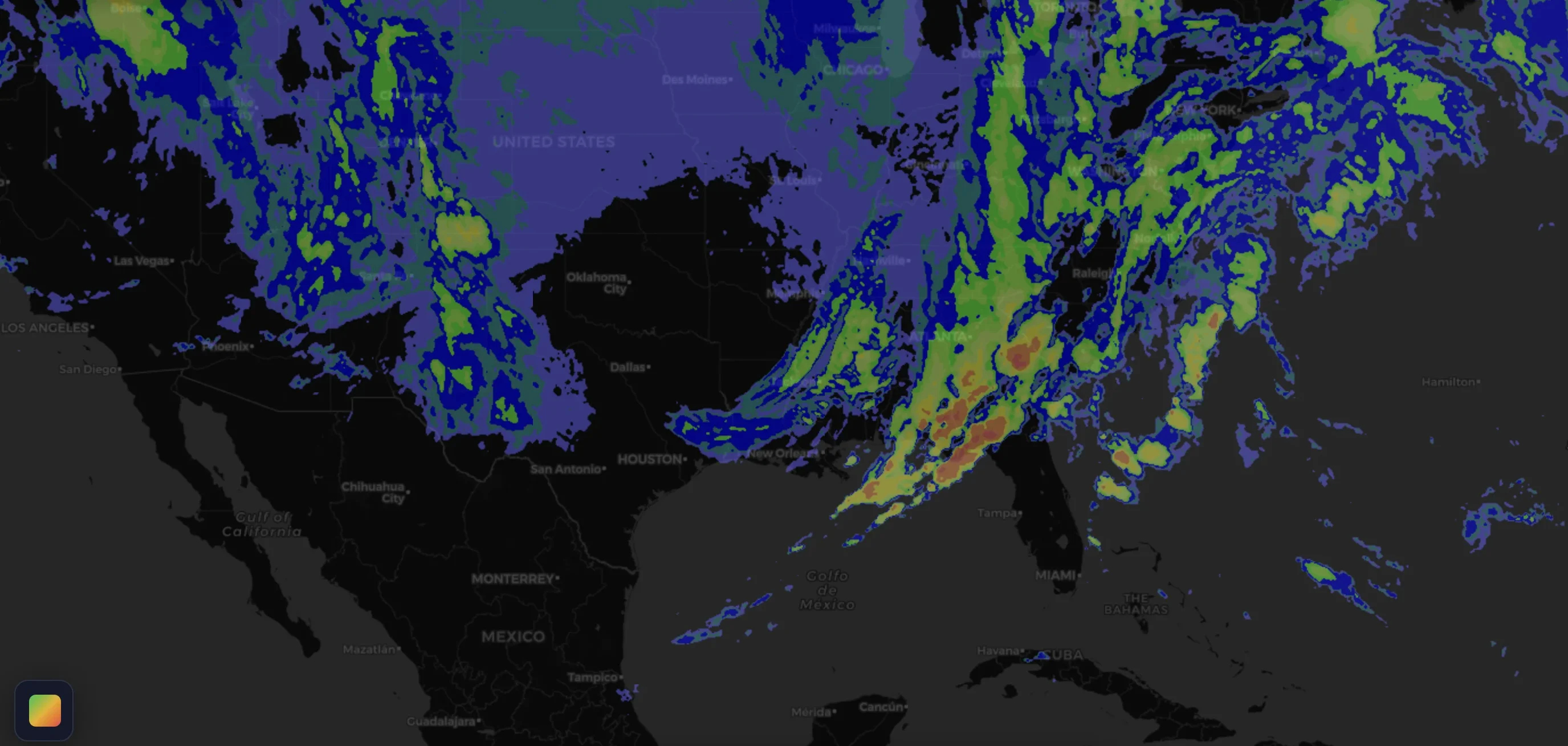
The layer has seven intensity levels, from blue to dark red: very weak, weak, light, moderate, strong, very strong and extreme. Blues and greens mean low intensity; yellow and orange, medium to high intensity; reds, the highest. Where the source is a satellite, intensity is an estimate based on the temperature of the cloud tops. Where there is ground radar, it comes from what the radar measures.
The other layers
Besides rain, the map has base layers and layers that stack on top. Base layers are picked one at a time: under “Now”, estimated rain from satellite, infrared satellite and strong storms from satellite (both in the Americas); under “Forecast”, rain and temperature for 48 hours and frost risk. On top of the one you pick you can add lightning, earthquakes and wind (beta), which shows direction and speed with moving particles. Lightning comes from the GLM sensor on GOES-19 in the Americas and from the MTG-LI sensor from EUMETSAT in Europe, Africa, the Middle East and India. The forecasts and the wind come from NOAA's GFS model and are available worldwide.
Earthquakes layer
Shows the latest earthquakes near your location, over 24 hours, three days or seven days (seven days by default). Each circle is coloured by magnitude; tap one to see magnitude, depth, zone and time. It is a Premium layer.
How often it updates
The radar updates about every 10 minutes and the map keeps the latest frames, so you can play the animation and see where the rain is moving. Lightning and earthquakes update every few minutes; wind and frost, every 6 hours. What you see on the radar is always a few minutes behind.
What its limits are
Where the source is a satellite, the Contingencias radar is not a Doppler radar: it does not measure wind inside the storm and intensity is an estimate. It does not measure hail or confirm that it fell either. The “Now” layers show what is happening now or a few minutes ago; the “Forecast” layers and the wind are estimates from a weather model, not observations. Contingencias is an independent app, not an official agency. In Mendoza, Premium users also see the DACC radar. For official warnings, check your national weather service.
How to use it
Move the map to your area, play the animation to see the recent path of storms, pick a base layer to compare clouds, rain and forecast and add lightning, earthquakes and wind on top: layers can be combined. The map remembers the layers you chose. If you want an alert when a severe storm is near your location, see Vigía alerts. The radar map and Vigía alerts are Premium features.